

Retracing the State Wide Area Network
Civilization in the modern age brings to mind cell phones and other new communication devices, wireless connections to the Internet, and the Internet itself. It is easy to overlook one important system that binds together an entire region. The State Wide Area Network is a kind of invisible digital highway. It carries information across entire regions, across many miles, many different judicial and civil institutions, and many government departments.
- Retracing the State Wide Area Network
- What is meant by the “Invisible Highway”
- How it Works Behind the Scenes
- At a basic level, the system is organized in tiers.
- The Importance of State Wide Area Networks
- Challenges In Establishing The Network
- The Future of State Wide Area Networks
- Conclusion
Although most people may never see it or perceive it, the State Wide Area Network is an unassailable, most important building block of digital infrastructure today. It is the unsung hero of the government (and especially public) schools, hospitals, and other public services.
A State Wide Area Network
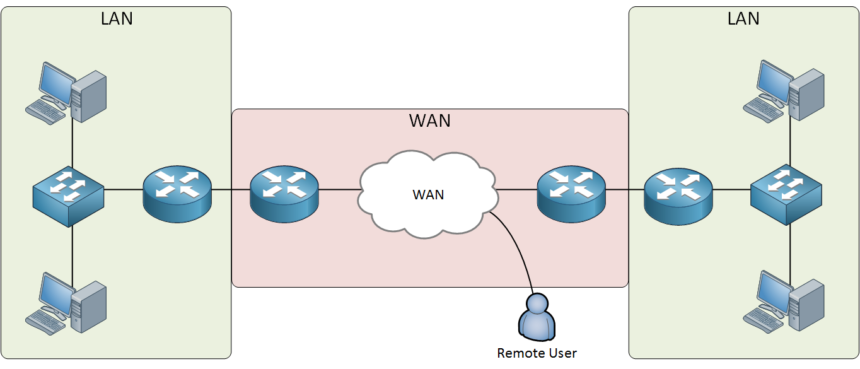
A State Wide Area Network is a communication system of a massive scale that connects many local networks, but unlike many other, smaller networks that merely stretch across the boundaries of a single building or campus, this system spans huge and wide geographic areas.
It integrates many of the major civil institutions and services such as government offices, schools, hospitals, and other civil and emergency services into one large system of unified and digital interconnected networks. It is the digital equivalent of a state’s nervous system where information may be communicated and “flow” between the farthest and most distributed parts of the state almost instantaneously.
What is meant by the “Invisible Highway”
An “invisible digital highway” is a specially coded phrase that refers to a system that is simultaneously capable of carrying enormous and unprecedented amounts of data and information and is essentially invisible. Like a highway, which is designed to facilitate the transportation of motorized vehicles over long distances between different cities, this system is designed to transport data across systems.
Emails, official documents, database updates, emergency alerts, and real-time reports all travel through these systems. Most people use services that rely on these systems without knowing they are there.
A few examples include:
A student receives exam results.
A hospital obtains patient records.
A police department gets emergency updates.
All of these examples depend on a state wide area network’s reliable performance.
How it Works Behind the Scenes
The design of a state wide area network utilizes high tech communication systems. These systems include fiber optic technologies, microwave links, leased lines, and secure wireless systems.
At a basic level, the system is organized in tiers.
Main Data Centers – These serve as control hubs and are the repositories and processors for large bulk data.
Regional Nodes – These connect all the local offices and institutions to the core network.
Communication Pathways – These are secure, high speed data transfer systems like fiber optics.
End Users – These are the public institutions and departments that utilize the network services.
Today’s systems are designed to include cloud computing, which facilitates user connectivity to data and applications throughout the network.
The Importance of State Wide Area Networks
The impact of a state wide area network is not limited to technology. Its effects can be seen in governance, the provision of public services, and in the day to day existence of every citizen.
One of the most striking benefits is being able to do things better. Instead of remaining isolated, each department can do its work on the basis of shared data. This improves interagency collaboration.
To highlight a few:
1. Public services are offered in a timelier manner.
Citizens receive faster results for requests and approvals.
2. More Efficient Healthcare Systems
A patient’s medical history helps hospitals provide better diagnosis.
3. More Effective Education Systems
Schools can better obtain education materials and manage student data.
4. Better Responding Systems
Real time communication helps manage a crisis.
Challenges In Establishing The Network
Cost is the first hurdle because laying fiber-optics is a large expense. The second hurdle is the sensitive data that is a target for cyberattacks. Keeping the system secure requires a large investment in encryptions, firewalls, and a constant monitoring.
The third challenge is rural connectivity. High-speed communication links are not feasible in remote areas resulting in required alternative connectivity solutions that are wireless and/or satellite.
The Future of State Wide Area Networks
The future of the state wide area network is firmly placed in making the systems smart, fast, and secure. Building networks with 5G, artificial intelligence, and edge computing are all examples of making networks streamlined.
The near future will bring self-repairing networks to replenish the systems and smart city integrations to increase efficiency in governance.
Conclusion
The established system of state wide area networks is the hidden yet expansive digital highway that makes modern life easier. Most will never know the true value of what they use and where it comes from, be it from healthcare, education, public safety, governance, and beyond. As time goes and the world develops, networks will continue to innovate and build pathways to smarter and more connected states.