

Exploring the Tee Ball
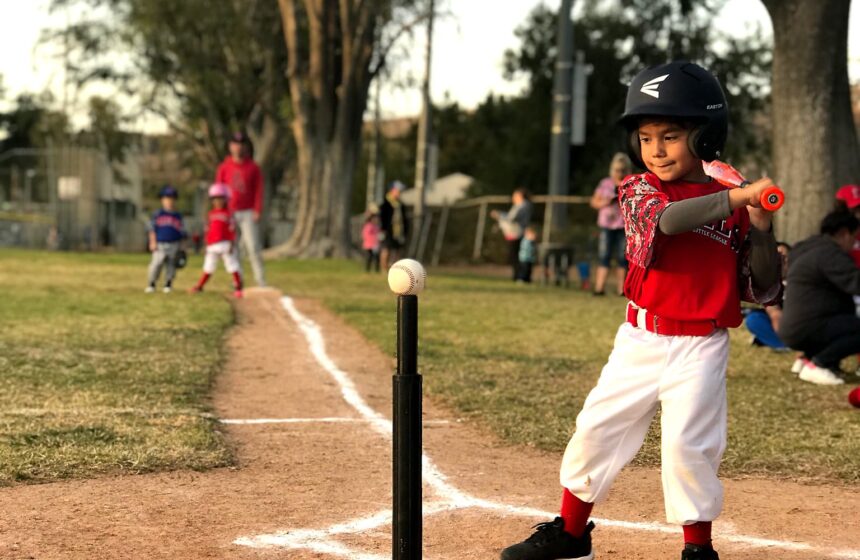
For countless kids, baseball’s journey kicks off in a small patch of grass, with a glove, a bat, and a ball that is perched on a stand. This is tee ball, an excellent introduction to the world of baseball. It is a fundamental building block to learn the sport in a safe and fun environment.
Tee ball is so much more than a game. It is a medium for kids to learn patience, confidence, team work and how to be a good sport. It also helps in the development of numerous social skills.
Tee Ball is simple yet complex. It is a good introduction to the world of sports for children.
What Is Tee Ball?
Tee ball is a simplified form of baseball for young ones who are just learning. The best way to differentiate tee-ball and baseball is to say in tee-ball, the players hit a ball that is standing on a tee. In baseball, a player hits a ball that is pitched to them.
By designing the game this way, kids can focus on learning the sport, rather than the frustration of missing a pitch.
Goals of Tee Ball
Teach children the basics of baseball
Teach the young ones the important skills and the rules of the game
Teach the young ones how to work together as a team
Help the young ones gain confidence
Help the young ones create a positive sports experience
Participation over competition is the most important thing about the game.
The Origins of Tee Ball.
Tee ball started because there was a need for a simpler version of baseball for children to be able to start learning how to play and have fun without the challenges of having to time the throw of a ball being pitched to hit with advanced coordination.
Instead of having a pitched ball, coaches started to create a way for children to play and practice hitting without as much of a frustration by placing the ball on a tee. Also, created a more fun version of baseball and encouraged more children to play.
Tee ball continued to grow in to a fun and organized piece of play that communities, schools, and other organized sports groups play around the world.
How Tee Ball Works.
Even though tee-ball is for beginners, there are some rules that align with a regular baseball game. The rules are just simplified in a way that the young children and beginners can play.
Some common rules are.
Batting
This game is all about learning the proper techniques to form a good swing and to be able to hit the ball.
Running the Bases
Once the ball is hit, players will learn to run all the way around the bases to understand the basic structure to baseball.
Field Positions
Children learn about all the different field positions, including pitcher, catcher, infield and outfield, and so on.
Team Participation
The Tee-Ball program makes batting and fielding participation a guarantee. Inclusion and learning are what we value most.
Each league might set a different rule, but the core objective of each one is to keep the focus on having fun while learning.
Skills Children Learn Through Tee Ball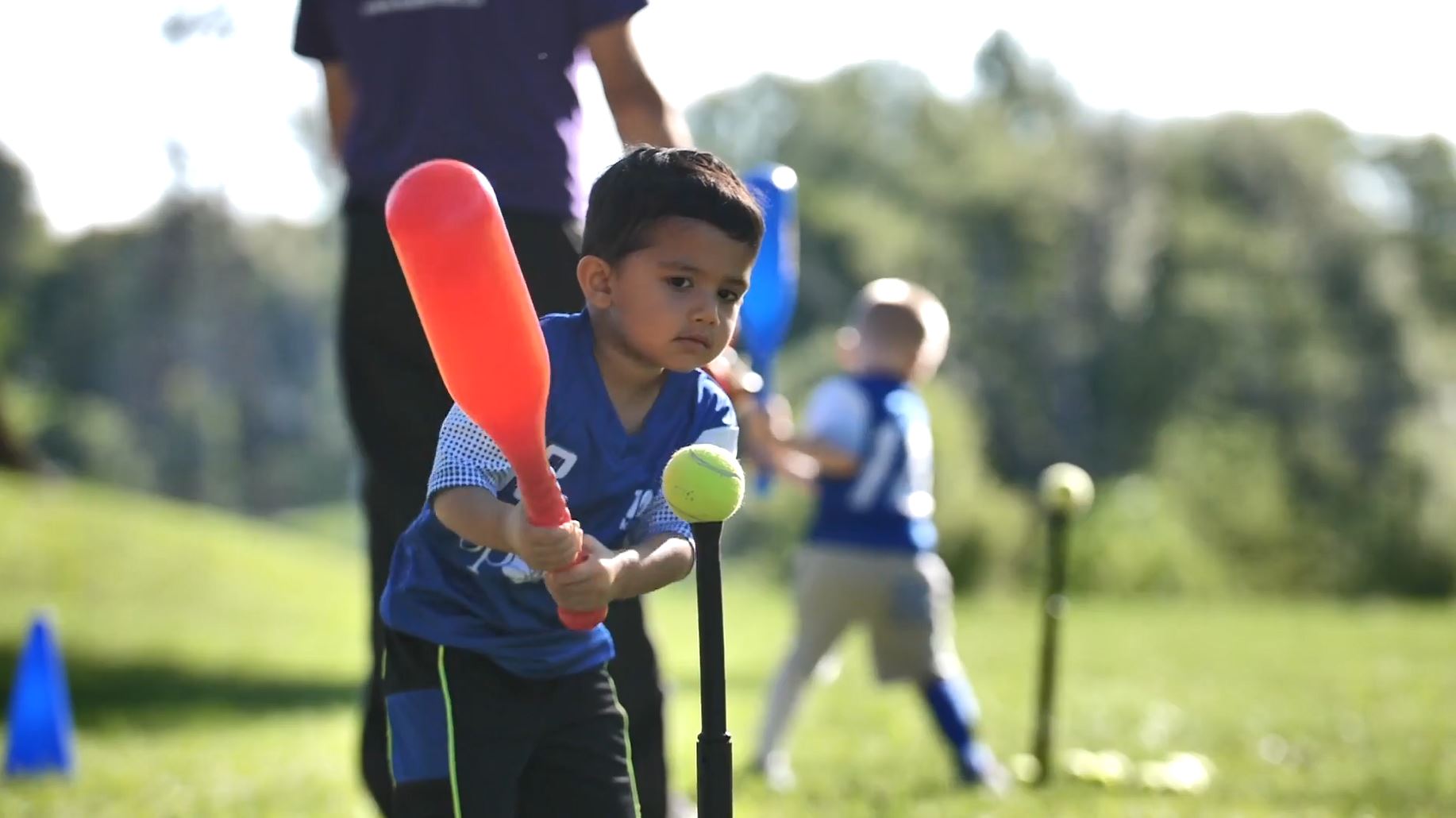
Developing physical and mental skills through Tee-Ball is one of its biggest advantages.
Players learn:
– Hand-Eye Coordination
Learning how to swing a bat requires the ability to focus.
– Throwing and Catching
Players learn basic skills that are instrumental to Tee Ball and baseball.
– Balance and Movement
Positioning and running around the bases helps with physical improvement.
– Teamwork
Players learn that the success of the team is predicated on the ability to work together.
These skills will help the players beyond the sport.
The Importance of Confidence in Tee Ball
Tee ball is the first formal sport for many kids and confidence building is a core focus of the program.
Tee ball participants will leave the program having achieved many small goals like:
– Hitting the ball for the first time
– Catching a ball
– Running around the bases
– Cheering on the team
Learning new skills is much easier with a positive attitude and a self-confidence.
Creating Childhood Memories Through Tee Ball
Tee ball is an event that makes memories that children, parents and the community will remember and cherish for many years to come.
Emotions associated with first uniforms, first team games, and first accomplishments are nostalgic and last a lifetime.
For many adults, their first experience of sport and competition was playing tee-ball. These early experiences provide a lifelong association with sport and physical activity.
Parents and Coaches
Parents and coaches have a large impact on the success of a tee ball experience. Young players need support, kindness, and direction.
Great coaches do all of the following:
Teach skills in an easy to understand manor
Make practice fun
Support the entire team
Teach and promote respect
Parents support coaches by celebrating the hard work and effort of the players and not just the outcome of the game. It creates a positive experience and allows players to continue to develop the skills that they are learning.
Evolution of Tee Ball
Modern tee ball programs have advanced with the focus to keep players safe, welcome new players, and teach players more.
Programs today have:
Proper training for the age of the player
Coaches that promote a positive attitude
More structured leagues
More players having the ability to participate
The goal of every program is to introduce players to the excitement of baseball.
The Importance of Tee Ball
Tee ball allows children to stay active, make friends, and learn skills that will help them throughout their lives in a world that is full of digital distractions.
The game itself teaches:
Self control
Respect
Cooperation
Waiting your turn
Not Giving Up
This valuable information enables tee ball players to develop into self-confident people.
Conclusion
Tee ball is not just a starter version of baseball. It teaches skills that are useful in all areas of life and allows players to develop a love for the game.
Tee ball teaches kids the value of good sportsmanship and teamwork, sportsmanship and skills building while instilling a love for sports, through the combination of encouragement and simple rules.
Tee ball players learn Association with sport early to evoke memories as players with a verified history that extends beyond the last inning with every swing at the bat and every run around the bases. Tee-ball success isn’t really measured in the score it’s measured in the confidence the players gain, the friendships the players make and most importantly the love for the game they develop.