
From Fish to Flavor: Bonito Flakes
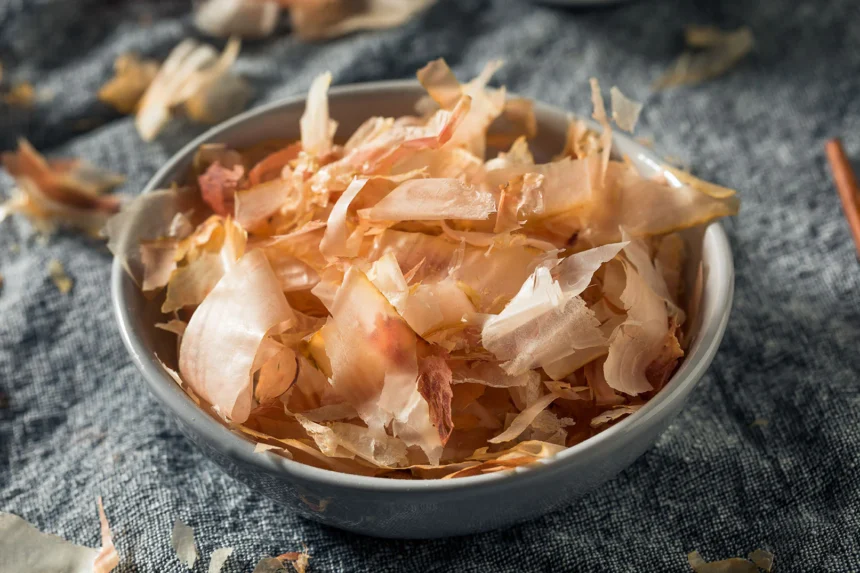
This light, feather-like garnish with a few centuries of tradition on your plate is a culinary treasure. Bonito flakes, in addition to their beauty, provide one of the richest sources of umami flavor from fish in Japanese cuisine. They are the product of a lengthy process that begins with fish.
- From Fish to Flavor: Bonito Flakes
- The First Transformation: Cooking and Cleaning
- Smoking and Drying: Building Intensity
- Fermentation: Flavor’s Secret Ingredient
- The Hardening Phase: Katsuobushi
- The Finishing Touch: The Bonito Flakes
- The Flavor Experience
- Culinary Uses in Everyday Cooking
- A Symbol of Culinary Tradition
- Conclusion
The journey of flavor-enhancing bonito flakes begins here.
The Beginning: Life in the Ocean
Skipjack tuna, or katsuo, in Japanese, are fish that swim in the warmer waters of the oceans. They are of high value in Japan due to their taste and texture.
When the skipjack tuna are caught, only the freshest are chosen for the labor intensive process of preservation that will follow.
The First Transformation: Cooking and Cleaning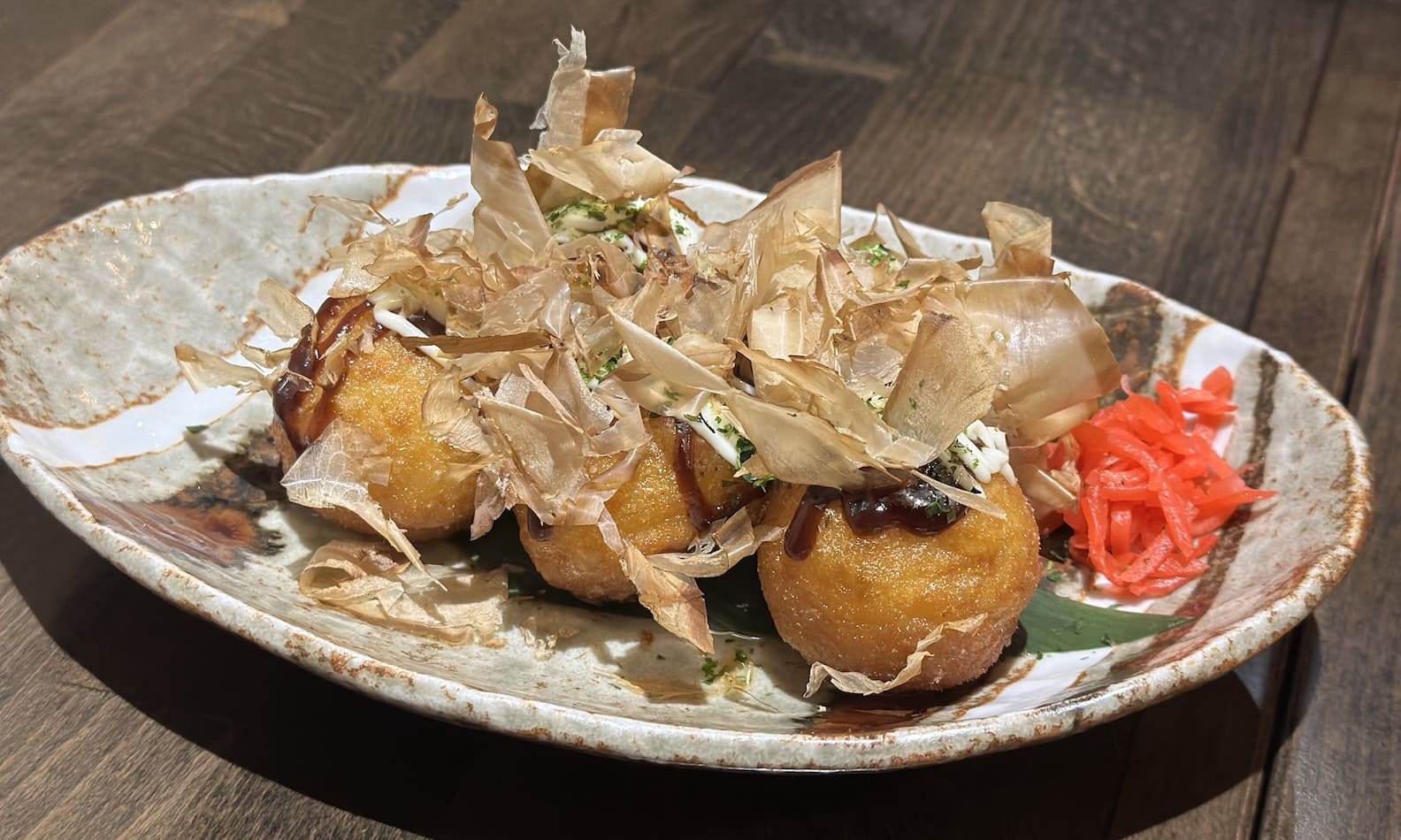
Caught skipjack tuna are filleted and boiled after being cleaned. Though simple, each step of this process is as important as the one that occurs after it. For this step in the process, the fish will need to toughen up a bit for the long process of preservation that will follow.
At this point fish tissue is still in the rough shape of fish, but in the subsequent steps is where the tissue will be transformed.
Smoking and Drying: Building Intensity
The next step in the creation of bonito flakes is smoking, where fish fillets are infused and flavor built up by smoking them over wood fires, a process that is repeated for weeks at a time.
Here’s where the flavor starts to evolve. The fish takes on a new, earthy, and rich aroma and woody notes and loses most of its moisture. The fish takes on a new aroma every time it gets a quick smoke, and the fish gets even more flavor focused as it dries in between.
Most times, this step is repeated to fully dry and harden the fish into a firm block of preserved fish known as katsuobushi.
Fermentation: Flavor’s Secret Ingredient
The fish doesn’t truly transform until the fermentation stage. After the three rounds of drying and smoking, the fish comes into contact with some environmental molds and starts to break down some of the remaining fats and proteins.
This process focuses the fish’s flavor to its umami, which is arguably the richest of all the flavors. It takes a long time, and katsuobushi becomes almost ageless in flavor as the complete process is stretched for several months.
The Hardening Phase: Katsuobushi
The fish becomes extremely dry and solid. The fish is then named katsuobushi, and is no longer deemed a food item, but a wood like material.
Katsuobushi’s flavor complex and deep as it is aged. The matured blocks are kept to age for more months to even years.
The Finishing Touch: The Bonito Flakes
Katsuobushi becomes a thin flake in its final transformation and now is easy to spot. With the right tools, the blocks become very thin shavings. These light decorations curl and sway with ease.
So thin, they’re nearly ephemeral in the presence of heat. They deliver concentrated umami flavor.
The Flavor Experience
Bonito flakes are savoury and delicate. Their flavor profile is made of notes of:
Smoke with a hint of the sea
Mild salinity
Umami depth
Slight sweetness
They are a great flavour complement, never overpowering.
Culinary Uses in Everyday Cooking.webp)
Bonito flakes are the main ingredient in dashi, one of the key Japanese broths. This is the broth for many other subsequent dishes that include miso and other noodle broths.
They are not limited to Japanese food. Many chefs use bonito flakes to:
Enrich sauces and marinades
Flavor roasted vegetables
Season rice
Create umami enriched dishes
They are a great way to elevate the complexity of a dish.
The Dancing Flakes Phenomenon
Bonito flakes are thin enough to respond to heat, air currents, and equilibrium changes. Because of this they seem to dance when placed on a hot dish.
A Symbol of Culinary Tradition
The long production process is a reminder that good flavor cannot be rushed, and represents a care for the ingredients used. This is why bonito flakes are a key part of Japanese culture.
Each flake is evidence of time, smoke, fermentation, and masterful technique.
Conclusion
Pioneering processes led to the culmination of ocean fishing, smoking, fermentation, and delicate flakes of umami. The processes encapsulated time, tradition, and a respect for the art of creation.
While they have a reputation of simplicity, flakes of bonito have a richness and complexity to them that is hard to describe. They illustrate that understated ingredients have rich and resonant flavors.