

Introduction
Initial reactions autism hand flapping behavior in autism can include curiosity, confusion, and concern. Hand movements that look so fast and repetitive can seem so strange to those who are unfamiliar with autism. However, for many individuals with autism, not only is autism hand flapping behavior not random, but it also serves a purpose and provides emotional support.
The fact that you are looking up hand-flapping behavior in autism suggests that you may be trying to figure out the reasons for the behavior and what it represents. This article aims to articulate the answer to these questions in a respectful and more human way.
What Is Autism Hand Flapping?
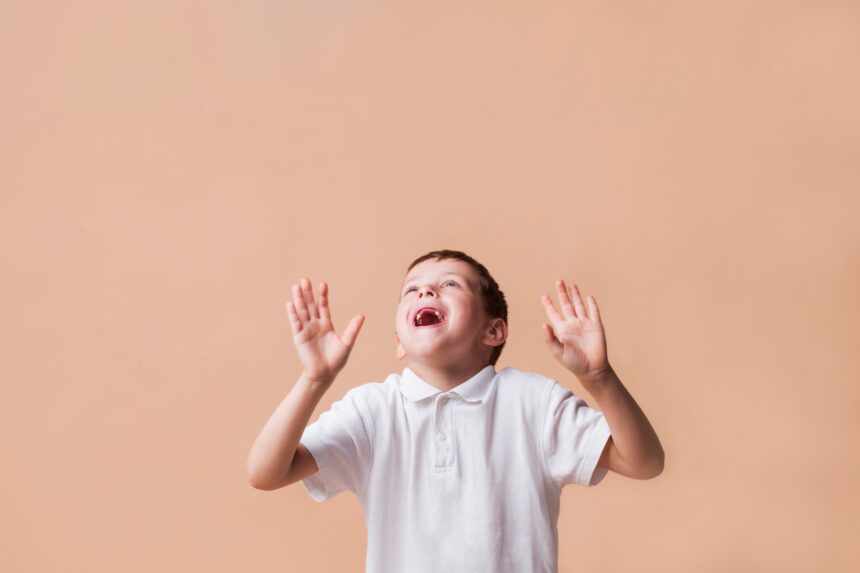
Autism hand flapping behavior is characterized when an individual waves or moves their hands or arms in a repetitive manner and is frequently associated with excitement, stress, sensory overload, or heightened emotions.
Autism hand flapping behavior falls under the category of stimming (short for self-stimulatory behavior). Stimming is characterized by the performance of repetitive actions or sounds that serve to help the individual with autism to gain a sense of control over their internal state.
Typical examples of stimming are:
Hand flapping
Rocking
Tapping or flicking fingers
Repeating words or sounds
Spinning
Of stimming behaviors, autism hand flapping is one of the most commonly known and easily observed.
Why Does Autism Hand Flapping Happen?

Autism indubitably alters the way sensory stimulus is perceived and the manner in which emotions are regulated. In order to understand autism hand flapping behavior in autism, it is important to understand these areas.
There are different reasons that can explain this behavior.
1. Emotional Expression
For many, autism hand flapping serves as a means to express strong emotions such as:
– Excitement
– Joy
– Anxiety
– Overstimulation
When these emotions are too intense and cannot be expressed verbally, individuals may use their bodies as an outlet.
2. Sensory Regulation
Autistic individuals may process sensory information differently than neurotypical individuals. Sounds, lights, and even emotions can become overwhelming and even underwhelming.
Flapping hands may serve as a way to:
– Decrease sensory overload
– Increase stimulation when feeling underwhelmed
– Create emotional balance
It may even function as a way to “reset” the sensory system.
3. Self-Soothing Mechanism
Similar to how one may tap their foot when feeling nervous and how people may bite their nails when feeling stressed, autism hand flapping one’s hands may serve as a self-soothing behavior.
Flapping one’s hands may help:
– Release nervous energy
– Decrease anxiety
– Create a feeling of comfort and control
4. Communication Without Words
Autism hand flapping can also function as a means of communication for some, especially for non-speaking individuals on the spectrum. It may even indicate:
– Excitement
– Discomfort
– Need for distance
– Emotional overwhelm
Flapping one’s hands may serve as a body language when there are no other words to express how one feels.
What Autism Hand Flapping Really Means
Flapping hands within the setting of Autism may be an expressive outlet that serves a greater purpose. These repetitive movements are not simply “random behaviors.” These movements can be used as an expression of coping stimuli and emotional intensity as well as the differing sensory experiences of the individual.
Autism hand flapping serves a purpose and is a natural response for individuals to cope with and express experiences that are otherwise difficult to articulate. Hand flapping presents itself as a coping mechanism. Rather than viewing hand flapping as a behavior needing to be fixed, it is a communicating outlet and expressing stimuli that otherwise remain internal.
Is Hand Flapping Dangerous for the Autistic?
Hand flapping associated with Autism is considered harmless in most situations. It is not an indication of a problem or a sign of something bad and does not need to be eliminated.
In a few instances, there can be a problem if:
The behavior causes injury or strain on the body (which typically is not the case)
The behavior impedes the performance of necessary activities
The person exhibits a negative emotional state while engaging in the behavior
In those cases, it may be more appropriate to redirect the focus rather than to try to eliminate the behavior.
Should Hand Flapping Be Eliminated?
The current position in Autism studies in particular and the behavioral sciences in general is that the presence of autism hand flapping and other stim behaviors is nothing to be concerned about.
In fact, the current position in the sciences is that the following is the best course of action:
Don’t be concerned about the self-regulation
Try to understand the self-regulation in the context of the person’s emotional state
Even reduce self-regulation reinforcement
In fact, the elimination of stimulation and self-regulation may enhance the emotional state and self-regulation and control.
Supporting the Autistic who Stims
If a person you know is an autistic hand flapper, the following is a list of actions that may provide support:
1. Acceptance
Try not to focus on correcting the behavior. Calm acceptance can foster trust and safety for the individual.
2. Identify in what Situations Hand Flapping Happens
Try to understand the emotional triggers. Is it happening when the individual is excited, stressed, or during sensory overwhelm?
3. Provide Support
Try to reduce stimuli that are perceived as overwhelming to the individual that may include distracting or bright sounds and light.
4. Personal Expression
If the individual is not harming him\herself or others, it is a natural behavior that should be allowed.
Hand Flapping as an Expression of Autism and Neurodiversity
Neurodiversity is a concept that shows how different brains work in different ways. Hand flapping associated with Autism is one of the ways that the neurodivergent express themselves and their perception of the world.
Neurodiversity believes that variations in behavior should be viewed as simply that rather than problems.
Conclusion
In the case of autism hand flapping is a natural behavior used to express a range of emotions and is a form of sensory and self-regulation. This behavior is not something to be afraid of or fixed, but should be understood and accepted.
When we stop stigmatizing autistic behavior and start understanding it, we are able to be more inclusive to all and respect autistic people and their communication.