
Understanding the Air Weapon Complex Beyond The Battlefield
Today’s ground combat is just one aspect of modern warfare. Strategic power is increasingly projected from altitude. The air weapon complex is the system that integrates all of the combat platforms (i.e. Aircraft, missiles, sensors, and digital intelligence).
- Understanding the Air Weapon Complex Beyond The Battlefield
- Beyond Conventional Air Power
- Air Weapon Complex Core Components
- Information and Intelligence Function
- Modern Systems and Technology
- Modern Defense and Its Strategic Value
- Network-Centric Warfare and Integration
- Modern Warfare and Its Concerns
- The Future of Air Weapon Systems
- Conclusion
Beyond the Battlefield: Understanding the Air Weapon Complex uses a simple idea: modern air power reflects the ideas of systems. It transcends the idea of machines flying; it is systems that can think and act.
What is The Air Weapon Complex?
The Air Weapon Complex is the entire synchronized ecosystem of aerial offensive and defensive capabilities. Fighter aircraft, Unmanned Aerial Vehicles (UAV), missiles, radars, reconnaissance satellites, and control centers all fit within this construct.
The systems that comprise the air weapon complex, unlike traditional air force units, operate collaboratively. Each element communicates and contributes to a dynamic representation of the operational environment.
In reality, it is a system of systems, not a single system.
Beyond Conventional Air Power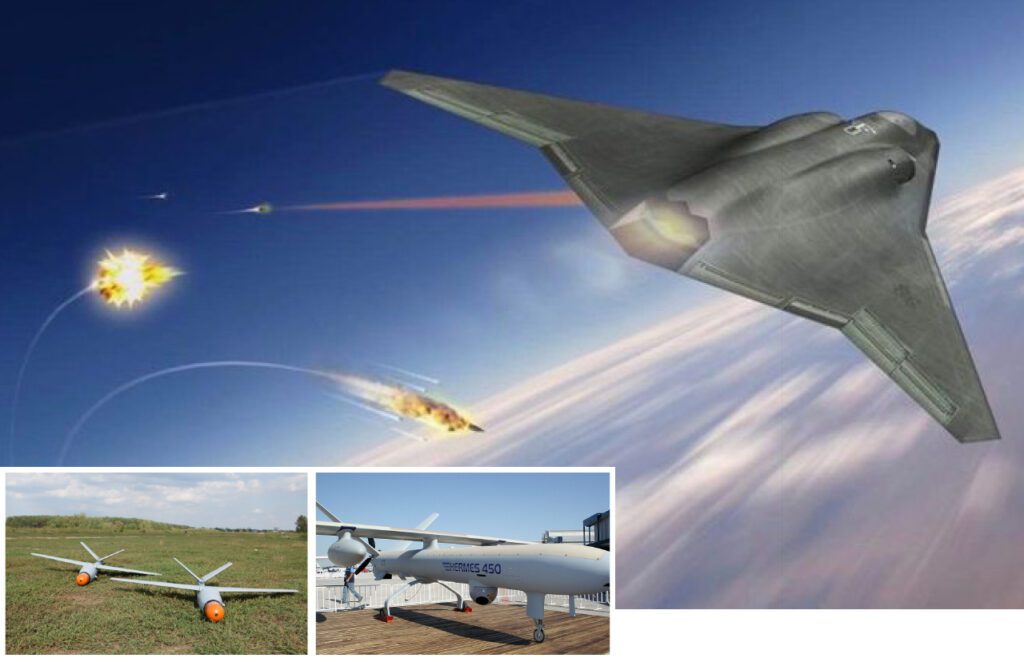
In prior decades of air power, the capabilities and attributes of aircraft defined the power. The role of the human operator was significant and planned activities typically occurred with little to no real-time information.
The air weapon complex has advanced beyond that paradigm. Today, physical capabilities and resources as well as interconnectedness and the flow of information are essential to achieving the desired effects.
Sensors can spot a threat. Satellites can track movement. Drones can collect information. Command centers can analyze data in real time. This advancement has caused aerial digital operations to replace disconnected missions.
Air Weapon Complex Core Components
The air weapon complex has strength in its pieces in these parts:
Airborne platforms. These consist of fighter jets, reconnaissance aircraft, and UAVs. These are the operational “hands” of the system.
Weapon systems. These consist of flexible, adaptive, and precise systems and guided missiles, as well as defensive measures.
Detection systems. These consist of radar and satellite systems, providing constant surveillance of the air.
Command and control networks. These systems process data and, along with detection systems, provide constant surveillance of the air.
These systems, combined with detection networks, create a seamless operational structure of command and control and processing authority.
Information and Intelligence Function
These systems are integrated with information, modularity, and, most importantly, real-time intelligence. The most advanced systems, coupled with real-time intelligence, lose effectiveness without accurate and timely data.
The most advanced systems, coupled with real-time intelligence, are about data processing and the least about physical defense.
Modern Systems and Technology
Transforming air systems and complementing the air weapon complex with defense and attack systems are based largely on rapidly advancing systems and technology.
Artificial intelligence increasingly aids analysis of large datasets and understanding of threats and decisions. Data learning improves machine learning system accuracy through past experiences.
Speedy communications bring data to every system instantaneously and eliminate latency for detection and reaction.
When combined, these systems modernize the air weapons complex, making it more responsive and flexible.
Modern Defense and Its Strategic Value
The air weapons complex forms the core of modern defense systems because of its speed, flexibility, and coverage.
Defense arms can scan and monitor large stretches of airspace, anticipate threats as they emerge, and prepare for coordinated actions across defense systems. This integration minimizes time and maximizes effectiveness.
It is just as critical for defense to know as it is to act.
Network-Centric Warfare and Integration
A significant aspect of modern warfare that the air weapons complex deals with is network-centric warfare. Warfare systems are no longer separate entities.
Innovative warfare systems integrate land, air, and sea. A radar detection in one location can initiate defensive actions across multiple platforms in mere seconds.
The air weapons complex focuses on creating such integration of systems.
Modern Warfare and Its Concerns
The air weapons complex is defense modernized, but complex systems are costly and vulnerable to cyber threats.
Increased inter-connectivity across systems heightens reliance on digital security. Data and communications network protection is as crucial as the protection of hardware and infrastructure.
The Future of Air Weapon Systems
Development of the air weapon systems is likely to feature increased automation and sophisticated use of artificial intelligence and advanced, totally integrated global surveillance systems.
Combination of autonomous drones, predictive analytics, and advanced satellite communications will fundamentally alter the way air operations are carried out.
This development will, however, continue the trend towards greater emphasis on the speed and accuracy of the decision, and so enhance responsiveness and intelligence of the system.
Conclusion
The air weapon systems signify a radical change in the design and application of air power. It is not a complex of systems, platforms, and systems, and integrates a multitude of systems, strategies, and communications.
The air weapon systems will help redefine air defense systems from a multitude of systems to a digitally integrated complex.
To understand the air weapon systems is to recognize that in the modern security environment, the battlefield extends beyond the physical domain to the networks that are most critical and most elusive.