
Introduction
Over the course of its history, the Earth has so many beautiful geological features. Boulder rock is one of the beautiful formations that Earth has created and is fascinating because of its size and the processes that create it.
- Introduction
- What are Boulder Rocks?
- Boulder Rock Formation
- Weathering
- Erosion
- Geological Movement
- Types of Boulder Rock
- Granite Boulder Rock
- Limestone Boulder Rocks
- Sandstone Boulder Rocks
- Basalt Boulder Rocks
- Applications of Boulder Rock
- Landscaping
- Construction
- Boulder rock can be used for:
- Boulders are highly useful in building natural habitats as they provide homes to:
- Boulder Rock’s Unique Aesthetic
- Boulder Rock and its Sustainabiility
- Significance of Boulder Rock Environmentally
- Conclusion
Boulders are large pieces of natural rock that are shaped by erosion and other geological processes. Weathering breaks down the rocks/would be boulders and changes the landscape of the Earth. These rocks can be found across the entire Earth in mountains, rivers, and forests. Beyond the geological processes, boulders are beautiful and durable and are used in landscaping, outdoor design, and construction.
This guide breaks down the processes, types, and uses of boulder-rock and its characteristics.
What are Boulder Rocks?
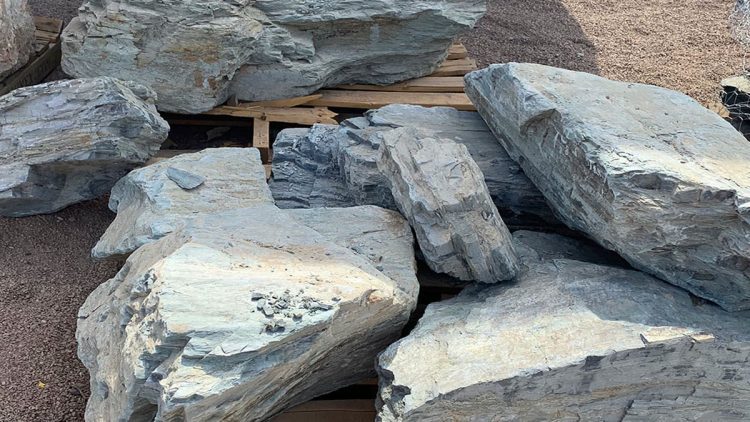
Boulder rocks are large naturally occurring rock fragments that are formed from geological processes over long periods and are larger than cobbles.
Boulders are large, heavy, and massive rocks, and unlike their smaller counterparts, are not moved. These massive rocks can stay in one place for millenia.
Boulder rocks can be different in many aspects and can be interpreted in various ways:
– Size
– Shape
– Color
– Texture
– Mineral Composition
Depending on environmental conditions and processes, the characteristics of boulders can change.
Boulder Rock Formation
Boulder Rock formation is a geological processes that take place over millions of years.
Boulders can be formed through various geological processes.
Weathering
Weathering occurs when elements such as wind, rain, temperature, and chemicals slowly break larger rock formations apart.
Over time, these larger rock formations become individual boulders.
Erosion
Erosion occurs through natural elements of flowing water, glaciers, and wind.
These processes can carry larger rocks and boulders throughout different landscapes and gradually affect the geology of the area.
Geological Movement
Tectonic movement and volcanic activity creates larger rock formations that can be boulders.
Types of Boulder Rock
The minerals and geology that comprise boulders determine the rock type.
Granite Boulder Rock
Granite boulders are one of the most common and are easily picturesque with their gray tones and speckles.
Granite boulders resist weathering and are popular in landscaping because of their durability.
Limestone Boulder Rocks
Limestone boulders are softer and can contain fossils because of their sedimentary material. These boulders are often used in landscaping.
Sandstone Boulder Rocks
Sandstone boulders can be red, brown, yellow, or orange. Their layered structures and patterns can be used in outdoor designs.
Basalt Boulder Rocks
Basalt boulders are volcanic, dark, and very durable. Their strength can be required in construction.
Applications of Boulder Rock
Boulder rock can be used in almost any type of application.
Landscaping
One of the primary applications of boulder-rock is for landscaping.
Boulders can be used for garden:
Borders
Decorative Elements
Rock Gardens
Waterfalls
Pathways
Boulders help add character and dimension to outdoor areas.
Retaining Walls
Boulders make excellent retaining walls because they help control the movement of soil and help remediate erosion.
They help serve a function and give an appealing aesthetic.
Construction
There are many boulders that are strong and highly durable that can be used for a variety of construction projects.
Boulder rock can be used for:
Building Foundations
Erosion Control
Landscape Structures
Protection along Roads
Boulder rock can also be used in the construction of natural habitats.
Boulders are highly useful in building natural habitats as they provide homes to:
Animals
Small Insects
Plants
Boulders help add to the natural environment and help promote balance in the ecosystem.
Boulder Rock’s Unique Aesthetic
Boulder rock is a natural material that is highly unique and very appealing.
No two boulders are the same. They each have a different history and can depict it through:
Surface Patterns
Minerals
Shapes
Textures
Boulders have the opportunity to be natural pieces of art.
Boulder Rock and its Sustainabiility
Currently boulder-rock is being used more in landscaping because it is a sustainable material. It can help designers create a more natural landscape by:
Reducing the demand for artificial materials.
They are typically found in the:
Residential gardens
Parks
Commercial landscapes
Recreational areas
Significance of Boulder Rock Environmentally
Aside from decoration and construction, boulder-rock carries environmental significance.
Boulders assist in:
Soil erosion
Landscape stabilization
Natural habitats
Water flow
Boulders aid many ecosystems.
Correct Selection of boulder-Rock
Size of rock
Type of rock
Desired color
Rock variety in local environment
Intended use
All these are important when determining which rock boulder to select.
Conclusion
Boulder-Rock is not just a large stone. It has the power to represent the history of Earth’s geological past.
Boulders have formed over the history of the Earth, through processes such as weathering and erosion, and have preserved the history of the Earth along the way.
Boulders rock carry huge significance and serve both purposeful and aesthetic functions in landscapes around the Earth in the modern world because of their natural character and beauty.