
Introduction
Dance is a beautiful combination of movement and music and has been embraced by all cultures around the world. Dance has evolved from traditional activities to competitive celebrations where individuals showcase athletic skills and creativity. dancesport types incorporate all these ideas while adding disciplined teamwork and artistic expression.
- Introduction
- Two Major Categories of Dancesport Types
- Waltz: The Dance of Grace
- Latin American Dancesport Types
- Samba: Energetic and Brazilian
- Cha-Cha: Sharp and Fun
- Rumba: Emotional
- Paso Doble: Strong and Dramatic
- Jive: Quick and Lively
- The Dance Sport World Wide
- Why the Various Dancesport Genres Continue to Attract
Entertainment is no longer the only purpose of dances. Dancesport has created a whole new world for entertainers by providing them a competitive outlet for their years of preparation. Dancesport combines cultures through different expressions of rhythm while having South American inspired dances reflect the Latin rhythms. Meanwhile European dancers display their elegant ballroom movements.
Competitive dancesport stems from a passion to perform and contains a universe of beauty and diversity.
Understanding the World of Dancesport
Dancesport combines competitive partner dancing, choreography, set rules and judges. However, unlike relaxed dancing, intense preparation and fitness are a must.
Dancesport judges are looking for:
Rhythm and timing
Technique
Connection with partner
Fluid movement and posture
Overall expression and quality of performance
Successfully completing a dancesport routine involves much more than executing the correct series of steps. It means conveying an emotional message and connection through movement and music.
Two Major Categories of Dancesport Types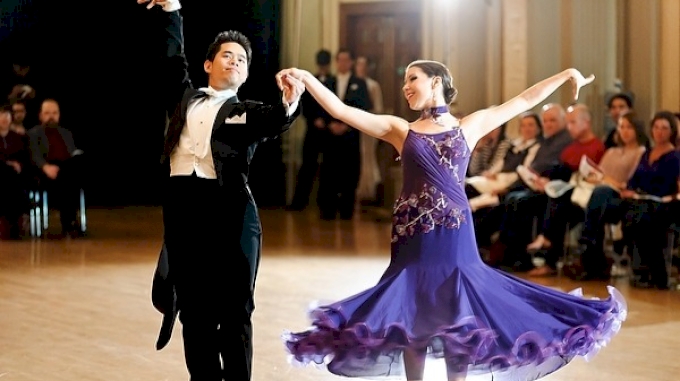
The most common styles of competitive dancesport fall under two categories:
Ballroom Dances
Latin American Dances
Each category has distinct characteristics and styles that combine to form the full spectrum of competitive dance.
Standard Ballroom Dancesport Types
Ballroom dances exhibit smoothness, grace, and a strong connection between partners. Competitors maintain a traditional dance hold while gliding across the dance floor.
Waltz: The Dance of Grace
The Waltz is the most famous dancesport style across the globe. The European dance is known for its smooth, flowing, and turning romantic style.
The Waltz is beautiful due to the dancers ability to rise and fall and move as one. The dance sport style of the Waltz requires a high level of balance and control.
Tango: Emotion and Expression
The Tango is an expressive and dramatic dance style. The Tango has a sharp and passionate style, unlike the smooth
Waltz.
Dancers use sharp and expressive movements and let pauses control the dance.
Quickstep: The Lively Dance
The Quickstep is the fastest dance style of the Standard ballroom dancesport. The dance style uses stamina due to the lively and fast footwork.
Foxtrot: The Elegant Dance
The Foxtrot is loved for its walking style and smooth transitions. The dance style uses an interpretation of the music to guide the dancers movements.
This style offers a sophisticated, elegant approach typical of classic ballroom. It continues to be a much-loved style globally.
Viennese Waltz: Tradition and Rapid Turning
As a quickened version of a traditional Waltz, the Viennese Waltz incorporates continuous circular motions. This dance demands a high degree of coordination.
Its rapid and graceful movements contribute to the dance being regarded as one of the most beautiful of all ballroom dances.
Latin American Dancesport Types
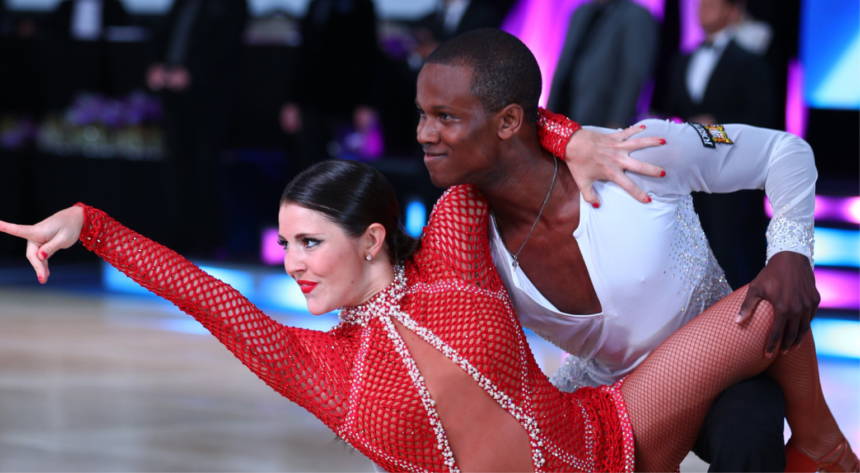
The energy and body movements that characterize the numerous Latin styles of competitive dance lend rhythm, passion, and a sense of intrinsic emotion to these dance forms.
Samba: Energetic and Brazilian
Of all the dancesport types, Samba is among the most energetic and is a dancing manifestation of the enjoyment of life celebrated in Brazilian culture. Its rapid movements combined with flexible elasticity and an awareness of musicality are a requirement of the bouncing, lively rhythm of this style of dance. Samba is appealing to both the audience and the contestants.
Cha-Cha: Sharp and Fun
Cha-Cha incorporates sharp movements made with a fun, rhythmic style, with playfulness exhibited in the interplay between the dance partners. It also demands a high degree of expressive ability.
Rumba: Emotional
Rumba is slower than the other Latin styles and focuses more on storytelling. Its slow movements and connection make Rumba a highly expressive dance form.
Paso Doble: Strong and Dramatic
Paso Doble is a Spanish inspired dance that portrays power through strong movements combined with confident posture. Its theatricality succeeds in creating a dramatic dance and aids in making it one of the most outstanding dancesport displays.
Jive: Quick and Lively
Famous for its rapid steps and lively rhythm, Jive is a dance style that requires good fitness, coordination and speed.
Jive is frequently very entertaining and fun to watch.
The Dance Sport World Wide
Currently, Dancesport is practiced and enjoyed around the globe. Many competitions are held internationally with dancers from many cultures and backgrounds.
All continents have developed various dancesports and with the international communications established, the dances have evolved and yet kept their traditions.
Dancesport maintains its popularity for the variety of physical and artistic stimulation it offers.
Why the Various Dancesport Genres Continue to Attract
The various types of dancesport can be appreciated for their merger of the sport and art. They can be greatly demanding from a physical and psychological point of view yet they allow for the expression of creativity and emotions.
From the physical benefits and coordination improvement to increased self confidence and personal appreciation, there are many advantages of Dancesports.