


Introduction
In today’s competitive world, understanding key measurements and concepts is essential for businesses, organizations, and professionals. One such important term is SOV, which is used across multiple industries with different meanings depending on the context.
While SOV can refer to different concepts, it is most commonly associated with Share of Voice, a measurement used in marketing, advertising, and public relations to understand a brand’s visibility compared with competitors. However, SOV can also have meanings in other professional fields.
This complete guide explores the meaning, types, uses, and importance of SOV across various industries.
What Is SOV?
SOV is an abbreviation that can represent different terms depending on the industry. The most common meaning is Share of Voice, which measures how much attention, visibility, or communication presence a brand has compared with others in the same market.
In marketing, SOV helps companies understand their position within a competitive environment.
For example, if a company receives a large percentage of advertising exposure compared with competitors, it has a higher share of voice.
SOV can measure visibility through:
-
Advertising campaigns
-
Social media mentions
-
Search engine presence
-
Media coverage
-
Brand discussions
Simply put, SOV shows how much of the conversation or attention a brand owns within its market.
Understanding Share of Voice (SOV) in Marketing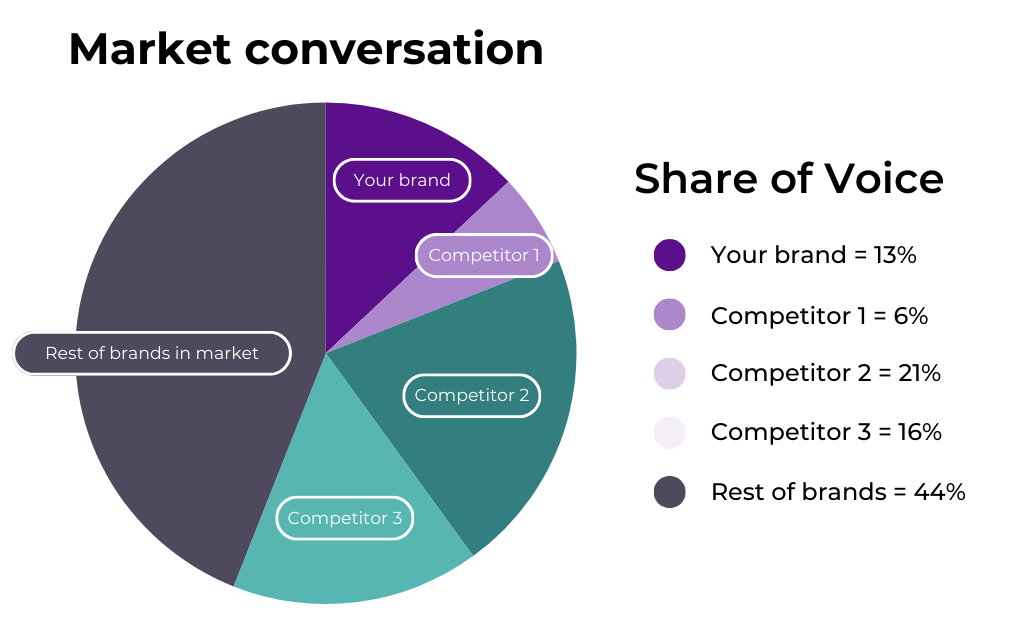
The marketing meaning of SOV is one of the most widely used applications.
Businesses use Share of Voice to evaluate their brand presence and compare performance against competitors.
A higher SOV often indicates that a brand is more visible and actively engaging with its audience.
Marketing teams analyze SOV to understand:
-
Brand awareness
-
Advertising effectiveness
-
Competitive position
-
Market influence
By tracking SOV, companies can make better decisions about their marketing strategies.
How SOV Is Calculated
Calculating SOV usually involves comparing a brand’s visibility with the total visibility available in a market.
A basic formula is:
SOV = Brand Visibility ÷ Total Market Visibility × 100
For example, if a company receives 20% of all advertising impressions within a specific industry, its SOV would be 20%.
The exact calculation method depends on the platform and data being measured.
Types of SOV
Different industries use different forms of SOV measurement.
Advertising Share of Voice
This measures a brand’s presence in paid advertising channels.
It may include:
-
Television ads
-
Online advertisements
-
Search ads
-
Display campaigns
Businesses use this information to compare advertising investment and visibility.
Social Media Share of Voice
Social media SOV measures how often a brand is mentioned compared with competitors.
It analyzes:
-
Posts
-
Comments
-
Hashtags
-
Online conversations
This helps brands understand their popularity and audience engagement.
Search Share of Voice
Search SOV measures a brand’s visibility in search engine results.
It considers factors such as:
-
Keyword rankings
-
Search impressions
-
Paid search visibility
A strong search SOV indicates better online presence.
Media Share of Voice
Public relations teams use media SOV to measure brand coverage in news outlets and publications.
It helps evaluate:
-
Press mentions
-
Public reputation
-
Media influence
Importance of SOV for Businesses
SOV provides valuable insights that help businesses understand their market position.
Some major benefits include:
Competitive Analysis
SOV allows companies to compare their visibility with competitors.
Businesses can identify:
-
Market leaders
-
Growth opportunities
-
Areas needing improvement
Marketing Strategy Improvement
By analyzing SOV data, companies can improve their campaigns and allocate resources more effectively.
Brand Awareness Measurement
A higher SOV often means more people are seeing and discussing a brand.
This can contribute to stronger brand recognition over time.
Performance Tracking
Companies can monitor whether their marketing efforts are increasing visibility.
SOV and Brand Growth
There is a strong relationship between SOV and brand growth.
When a company consistently increases its share of voice, it may improve its chances of gaining market attention.
Greater visibility can lead to:
-
More customer awareness
-
Increased engagement
-
Higher market influence
However, SOV alone does not guarantee success. It must be combined with strong products, customer experience, and effective business strategies.
SOV in Digital Marketing
In the digital era, SOV has become especially important because online competition continues to increase.
Digital marketers track SOV across platforms such as:
-
Search engines
-
Social media networks
-
Online advertising channels
-
Content platforms
Digital SOV helps marketers understand where their brand stands in online conversations.
Challenges of Measuring SOV
Although SOV is valuable, measuring it accurately can be challenging.
Common challenges include:
-
Different measurement methods
-
Changing consumer behavior
-
Large amounts of online data
-
Difficulty comparing platforms
Businesses need reliable tools and clear goals to get meaningful insights from SOV analysis.
Other Meanings of SOV
While Share of Voice is the most common business-related meaning, SOV may represent different terms in other fields.
Examples include:
-
Statement of Value
-
System of Values
-
State of the Version
-
Other industry-specific abbreviations
The meaning depends on the context where the term is used.
Future Importance of SOV
As markets become more competitive, understanding visibility and influence will become increasingly important.
Future SOV measurement may involve:
-
Artificial intelligence analysis
-
Real-time brand monitoring
-
Advanced customer insights
-
Automated competitive research
These technologies will help organizations better understand their position in changing markets.
Conclusion
SOV is an important concept that helps measure visibility, influence, and competitive presence across different industries. In marketing, especially, Share of Voice provides valuable insights into how brands compare with competitors and how effectively they capture audience attention.
By understanding SOV, businesses can improve strategies, track growth, and make smarter decisions. Whether used for advertising, social media, search marketing, or other professional applications, SOV remains a powerful tool for measuring impact in today’s competitive environment.